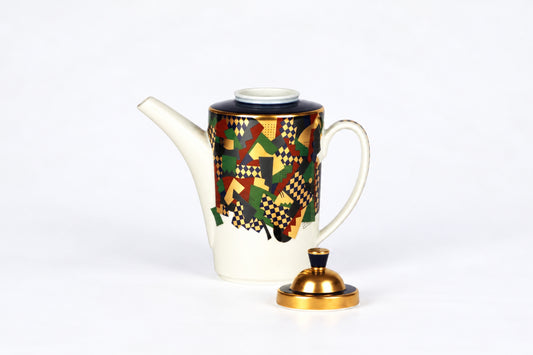
RÖRSTRAND – Swedish grace
The story of Rörstrand began in 1726, when a porcelain manufactory was established in Stockholm. Initially producing richly decorated faience inspired by European and Asian ceramics, Rörstrand gradually developed into one of Sweden's most important ceramic manufacturers. Over the centuries, its creations have reflected changing tastes, techniques and ideas about how people live and dine.
-
As production expanded, Rörstrand embraced new materials, printing techniques and decorative styles, making beautifully designed tableware accessible to a wider audience. From the colourful ornamentation of its early faience to the clean lines of twentieth-century Scandinavian design, the company continually adapted while preserving its commitment to quality and craftsmanship.
-
Rörstrand's identity was shaped by generations of influential artists and designers, including Louise Adelborg, Gunnar Nylund, Hertha Bengtson, Marianne Westman and Carl-Harry Stålhane. Their creations introduced enduring classics such as Swedish Grace, Mon Amie, Blå Eld and Koka, helping define the character of Swedish tableware.
-
Today, Rörstrand remains an important part of Scandinavian design heritage. Although its historic factory in Lidköping closed in 2005, its celebrated patterns and designs continue to be appreciated by collectors and design enthusiasts around the world.
Rörstrand collection
-
Coffee pot and Coffee cup, Festivo, Heikki Orvola, Rörstrand
Regular price 430,00 EURRegular price0,00 EURSale price 430,00 EUR -
Bowl, Oiva Toikka, Rörstrand
Regular price 220,00 EURRegular priceSale price 220,00 EUR -
Ceramic wall plate, Birger Kaipiainen, Rörstrand
Regular price 2.400,00 EURRegular price0,00 EURSale price 2.400,00 EUR -
Coffee pot and Coffee cup, Festivo, Heikki Orvola, Rörstrand
Regular price 500,00 EURRegular price0,00 EURSale price 500,00 EURSold out -
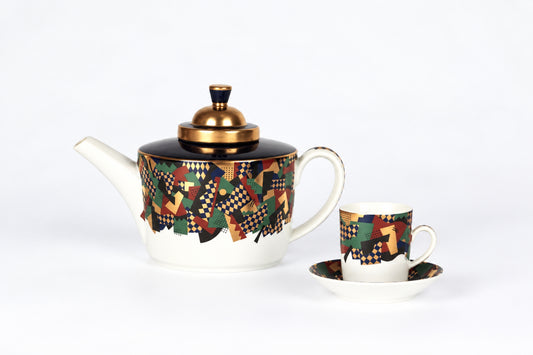
Teapot and Teacup, Festivo, Heikki Orvola, Rörstrand
Regular price 480,00 EURRegular price0,00 EURSale price 480,00 EURSold out -
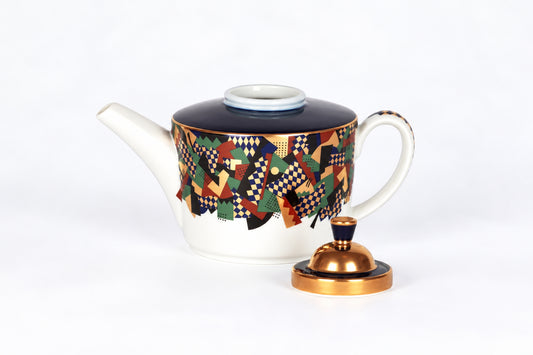
Teapot, Festivo, Heikki Orvola, Rörstrand
Regular price 290,00 EURRegular price0,00 EURSale price 290,00 EUR -
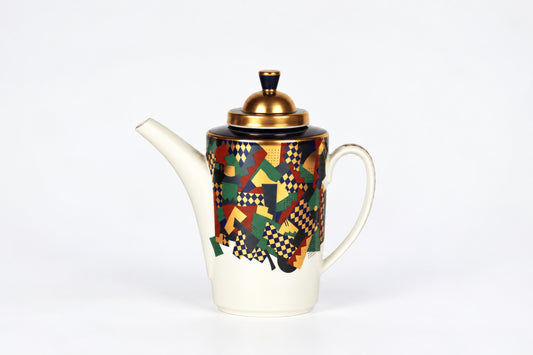
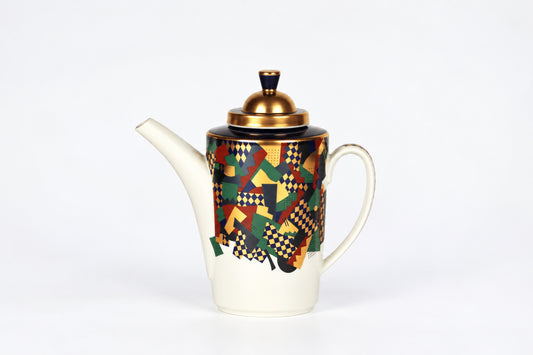
Coffee pot, Festivo, Heikki Orvola, Rörstrand
Regular price 290,00 EURRegular price0,00 EURSale price 290,00 EUR
Timeline
-
1726 – Rörstrand is founded in Stockholm, becoming one of Sweden's earliest ceramic manufactories. Its initial production focuses on colourful, tin-glazed faience.
1770s – Rörstrand begins developing English-inspired flintware, expanding beyond its traditional faience production.
1782 – Rörstrand acquires the competing Marieberg ceramic manufactory in Stockholm. Production at Marieberg continues until 1788, and its legacy later influences Rörstrand's iconic factory mark.
1860s – Rörstrand becomes one of Sweden's largest ceramic manufacturers, reflecting the growing demand for domestically produced tableware.
1881 – Rörstrand begins producing feldspar porcelain, expanding its range of ceramic materials.
1884 – Rörstrand introduces its famous crown mark, featuring the factory name surrounded by Sweden's three crowns. Inspired by the Marieberg legacy, it becomes one of the most recognisable symbols of the brand.
1897 – Rörstrand receives a gold medal at the Stockholm Art and Industrial Exhibition, reflecting its established reputation for ceramic craftsmanship and design.
1926 – The historic Stockholm factory closes, and production moves to Gothenburg following the acquisition of the Gothenburg porcelain factory.
1930 – Designer Louise Adelborg presents the National Service at the Stockholm Exhibition. Later known as Swedish Grace, it becomes one of Rörstrand's most enduring design classics.
1936–1939 – Production gradually moves from Gothenburg to Lidköping, which becomes the company's principal manufacturing centre.
1950s–1960s – Designers including Hertha Bengtson, Carl-Harry Stålhane and Marianne Westman shape a new era of Swedish ceramic design with celebrated collections such as Blå Eld, Koka and Mon Amie.
1984 – Rörstrand is acquired by the Finnish company Wärtsilä, beginning a new chapter in its ownership history.
1990 – Rörstrand becomes part of the Hackman Group, together with other established Nordic tableware brands.
2001 – Rörstrand becomes part of the Iittala Group, bringing its heritage together with other Nordic design brands.
2005 – The historic factory in Lidköping closes, ending nearly 280 years of factory production under the Rörstrand name.
2007 – Fiskars Group acquires the Iittala Group, including the Rörstrand brand.
Today – Three centuries after its founding, Rörstrand remains an important part of Scandinavian design heritage. Its celebrated patterns and timeless designs continue to be appreciated by collectors and design enthusiasts around the world.
Why collectors love Rörstrand
-
Collectors appreciate Rörstrand for its remarkable combination of Swedish design, artistic expression and everyday functionality. Across three centuries, the manufactory has created everything from richly decorated faience to elegant porcelain and distinctive art pottery, reflecting the changing tastes and craftsmanship of each era.
-
From the timeless elegance of Swedish Grace to the expressive patterns of Mon Amie and Ostindia, Rörstrand's designs bring character and history to the table. For collectors, each piece offers a connection to Sweden's design heritage and the generations of artists who helped shape it.
-
Rörstrand legends
Louise Adelborg
The pioneer of Swedish grace
Marianne Westman
The queen of Swedish patterns
Gunnar Nylund
The sculptor of modern ceramics
Hertha Bengtson
The master of colour and form
Did you know?
-
One of Europe's oldest porcelain brands
Founded in Stockholm in 1726, Rörstrand is one of Europe's oldest porcelain brands. For three centuries, it has reflected the evolution of Swedish ceramics, from richly decorated faience to modern Scandinavian design.
-
Three cities, one legacy
Rörstrand's manufacturing history spans Stockholm, Gothenburg and Lidköping. The factory moved from Stockholm to Gothenburg in 1926, then gradually transferred production to Lidköping during the 1930s. The historic Lidköping factory closed in 2005, but the designs remain part of Sweden's cultural heritage.
-
A crown with a story
Rörstrand introduced its famous three-crown mark in 1884. The design drew inspiration from the legacy of the Marieberg factory, which Rörstrand owned from 1782 to 1788. The mark became one of the most recognisable symbols in Swedish ceramics.
-
Thousands of patterns, countless stories
Over its long history, Rörstrand has produced thousands of tableware patterns. Not every design received a name: some were identified only by production numbers, making the study of older pieces a fascinating challenge for collectors.
-
A floral pattern inspired by a rainy day
Designed by Marianne Westman in 1952, Mon Amie is recognised by its cobalt-blue flowers against a white background. Its distinctive floral pattern has become one of Rörstrand's most beloved design classics.
-
Swedish Grace was born at an exhibition
In 1930, designer Louise Adelborg presented a tableware collection called National Service at the Stockholm Exhibition. Later known as Swedish Grace, its delicate wheat-ear relief and understated elegance became enduring hallmarks of Swedish design.
-
Coffee pot and Coffee cup, Festivo, Heikki Orvola, Rörstrand
Regular price 430,00 EURRegular price0,00 EURSale price 430,00 EUR -
Bowl, Oiva Toikka, Rörstrand
Regular price 220,00 EURRegular priceSale price 220,00 EUR -
Ceramic wall plate, Birger Kaipiainen, Rörstrand
Regular price 2.400,00 EURRegular price0,00 EURSale price 2.400,00 EUR -
Coffee pot and Coffee cup, Festivo, Heikki Orvola, Rörstrand
Regular price 500,00 EURRegular price0,00 EURSale price 500,00 EURSold out -
Teapot and Teacup, Festivo, Heikki Orvola, Rörstrand
Regular price 480,00 EURRegular price0,00 EURSale price 480,00 EURSold out -
Teapot, Festivo, Heikki Orvola, Rörstrand
Regular price 290,00 EURRegular price0,00 EURSale price 290,00 EUR -
Coffee pot, Festivo, Heikki Orvola, Rörstrand
Regular price 290,00 EURRegular price0,00 EURSale price 290,00 EUR